
AN ACCOUNT OF THE SEMINARY That will be opened On Monday the Fourth Day of AUGUST, At EPSOM in SURREY, For the INSTRUCTION of TWELVE PUPILS IN The GREEK, LATIN, FRENCH, and ENGLISH Languages. LONDON: Printed for T.CADELL, in the Strand. M.DCC.LXXXIII. Of whom information respecting other particulars may be received. AN ACCOUNT OF THE SEMINARY, &c. THE two principal objects of human power are government and education. They have accordingly engrossed a very large share in the disquisitions of the speculative in all ages. The subject of the former indeed is man, already endowed with his greatest force of body, and arrived at the exercise of his intellectual powers: the subject of the latter is man, as yet shut up in the feebleness of child... (From : Anarchy Archives.)

Ambush, by Herbert Read
Criterion Miscellany - No 16. Ambush, Herbert Read, Faber & Faber First Blood Snow falling all night: in the morning the world will be white. The earth will be covered with a nice new coat of paint, to hide the scars and pockmarks. For the earth is in a bad way-a battered old scarecrow, blackened, ragged, her fingers and toes all splintered. Oh such a mess! Sanctuary Wood: the god of this sacred place is Moloch, and he is a very fierce old god, and people say that to seek sanctuary in his arms is to say goodbye to your beloved's. His sanctuary a wood, a dark gloomy glade, full of caves and ditches. If you wait till daylight you will find that the trees have no branches, but are whiskered with splinters. Tatterdemalion trees, you might s... (From : Anarchy Archives.)

ANARCHISM: Its Philosophy and ldeal. Translated from the German by Harry Lyman Koopman. Ever reviled, accursed,-n'er understood, Thou art the grisly terror of our age. "Wreck of all order," cry the multitude, "Art thou, and war and murder's endless rage." O, let them cry. To them that ne'er have striven, The truth that lies behind a word to find, To them the word's right meaning was not given. They shall continue blind among the blind. But thou, O word, so clear, so strong, so pure, That sayest all which I for goal have taken. I give thee to the future! -Thine secure When each at last unto himself shall waken. Comes it in sunshine? In the tempest's thrill? I cannot tell......but it the earth shall see! I am an Anarchist! Wherefore I will No... (From : Anarchy Archives.)

[Comrade H. Davis of the Socialist League, delivered a lecture having this title, at 13 Farringdom Road, under the auspices of the Clerkenwell Branch of the Socialist League, on the 22nd of last month.] In all discussions on this subject, said be, whether our opponents be of the most generous or the most hostile sort, Anarchy, is, they admit, the highest form of civilization conceivable. Anarchy has been defined by an intelligent opponent as "a state of Society in which each individual is a law unto himself." A grand, but an impossible ideal, we are told, this is when looked at from the imperfections of to-day. Now opposition to most schemes for a reorganization of Society are urged from a more or less well defined knowledge of the imperfec... (From : AnarchyArchives.)

Note For "Anarchist Morality" This study of the origin and function of what we call "morality" was written for pamphlet publication as a result of an amusing situation. An anarchist who ran a store in England found that his comrades in the movement regarded it as perfectly right to take his goods without paying for them. "To each according to his need" seemed to them to justify letting those who were best able foot the bills. Kropotkin was appealed to, with the result that he not only condemned such doctrine, but was moved to write the comrades this sermon. Its conception of morality is based on the ideas set forth in Mutual Aid and later developed in his Ethics. Here they are given special application to "right and wrong" in the business of social living. The job is done with fine feeling and with acute shafts at the shams of current morality. Kropotkin sees the source of all so-called moral ideas in primitive superstitions. The re...

(Originally published in the Contemporary Review, and then reprinted as a pamphlet by Benjamin R. Tucker, 1884) An Anarchist on Anarchy by Elisée Reclus “It is a pity that such men as Elisée Reclus cannot be promptly shot.” – Providence Press To most Englishmen, the word Anarchy is so evil-sounding that ordinary readers of the Contemporary Review will probably turn from these pages with aversion, wondering how anybody could have the audacity to write them. With the crowd of commonplace chatterers we are already past praying for; no reproach is too bitter for us, no epithet too insulting. Public speakers on social and political subjects find that abuse of Anarchists is an unfailing passport to public favor. Every... (From : Anarchy Archives.)

A special dispatch from Chicago, Ill., says: The Anarchists in Chicago are becoming more bold, and scarcely a day passes now but that some meeting of theirs or some secret work is exposed....The fact has also been brought out that the Anarchists have established a number of schools here, and are endeavoring to establish more, at which the teachings of Johann Most are to be the text books. In the rear of a liquor store at Lincoln Avenue and Halsted Street, a reporter found seated around the low, dingy room about 120 children, from five to fourteen years of age, listening intently to what their teacher was explaining of the teachings of Most. He told the little ones that Spies and Parsons had been murdered by the capitalists, and in eloquent ... (From : AnarchyArchives.)

The workingman, whose strength and muscles are so admired by the pale, puny off-springs of the rich, yet whose labor barely brings him enough to keep the wolf of starvation from the door, marries only to have a wife and house-keeper, who must slave from morning till night, who must make every effort to keep down expenses. Her nerves are so tired by the continual effort to make the pitiful wages of her husband support both of them that she grows irritable and no longer is successful in concealing her want of affection for her lord and master, who, alas! soon comes to the conclusion that his hopes and plans have gone astray, and so practically begins to think that marriage is a failure. THE CHAIN GROWS HEAVIER AND HEAVIER As the expenses grow... (From : Anarchy Archives.)

"Peter Kropotkin...was recognized by friend and foe as one of the greatest minds...of the nineteenth century...The lucidity and brilliance of his mind combined with his warmheartedness into the harmonious whole of a fascinating and gracious personality. " -Emma Goldman REVOLT! Addressed to young men and women preparing to enter the professions, An Appeal to the Young was first published in 1880 in Kropotkin's paper, La Revolte, and was soon thereafter issued as a pamphlet. An American edition was brought out by Charles H. Kerr in 1899, in the wake of the great Anarchist's first U.S. speaking tour; his Memoirs of a Revolutionist was also published (by Houghton-Mifflin) that year. A new edition in Kerr's "Pocket Library of Socialism" appeared... (From : Anarchy Archives.)

The ResurrectionThe presiding justice arrived early. He was a tall, stout man, with long, grayish side-whiskers. He was married, but, like his wife, led a very dissolute life. They did not interfere with each other. On the morning in question he received a note from a Swiss governess, who had lived in his house during the summer, and was now passing on her way from the South to St. Petersburg. She wrote that she would be in town between three and six o'clock p. m., and wait for him at the "Hotel Italia." He was, therefore, anxious to end his day's sitting before six o'clock, that he might meet the red-haired Clara Vasilievna. Entering his private chamber, and locking the door behind him, he produced from the lower shelf of a book-case two dumb-bells, made twenty motions upward, forward, sidewise and downward, and three times lowered himself, holding the bells above his head. "Nothing so refreshes one as a cold-water bath and exercise," he thought, feeling with...

Why do you clothe me with scarlet of shame? Why do you point with your finger of scorn? What is the crime that you hissingly name When you sneer in my ears, "Thou bastard born?" Am I not as the rest of you, With a hope to reach, and a dream to live? With a soul to suffer, a heart to know The pangs that the thrusts of the heartless give?" I am no monster! Look at me -- Straight in my eyes, that they do not shrink! Is there aught in them you can see To merit this hemlock you make me drink? This poison that scorches my soul like fire, That burns and burns until love is dry, And I shrivel with hate, as hot as a pyre, A corpse, while its smoke curls up to the sky? Will you touch my hand? It is flesh like yours; Perhaps a little more brown and gr... (From : Anarchy Archives.)
Bill Haywood Remembers the 1913 Paterson Strike Source, William D. Haywood,"On the Paterson Picket Line," International Socialist Review, 13 (June 1913): 850-851. In this excerpt from an article published during the 1913 Paterson Silk Strike by "Big" Bill Haywood, he comments on the women’s role in the strike. Haywood was a founder and national leader of the Industrial Workers of the World (IWW). ...The women have been an enormous factor in the Paterson strike. Each meeting for them has been attended by bigger and bigger crowds. They are becoming deeply interested in the questions of the hour that are confronting women and are rapidly developing the sentiments that go to make up the great feminist movement of the world. With them it is... (From : Rutgers University.)
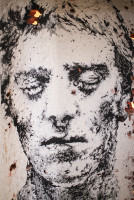
Boyhood, by Leo Tolstoy
Translated by C.J. HOGARTH CONTENTS I. A SLOW JOURNEY II. THE THUNDERSTORM III. A NEW POINT OF VIEW IV. IN MOSCOW V. MY ELDER BROTHER VI. MASHA VII. SMALL SHOT VIII. KARL IVANITCH’S HISTORY IX. CONTINUATION OF KARL’S NARRATIVE X. CONCLUSION OF KARL’S NARRATIVE XI. ONE MARK ONLY XII. THE KEY XIII. THE TRAITRESS XIV. THE RETRIBUTION XV... (From : Gutenberg.org.)

In olden times, men of science, and especially those who have done most to forward the growth of natural philosophy, did not despise manual work and handicraft. Galileo made his telescopes with his own hands. Newton learned in his boyhood the art of managing tools; he exercised his young mind in contriving most ingenious machines, and when he began his researches in optics he was able himself to grind the lenses for his instruments and himself to make the well known telescope which, for its time, was a fine piece of workmanship. Leibnitz was fond of inventing machines: windmills and carriages to be moved without horses preoccupied his mind as much as mathematical and philosophical speculations. Linnaeus became a botanist while helping his f... (From : Anarchy Archives.)

Childhood, by Leo Tolstoy
Translated by C.J. Hogarth CONTENTS I THE TUTOR, KARL IVANITCH II MAMA III PAPA IV LESSONS V THE IDIOT VI PREPARATIONS FOR THE CHASE VII THE HUNT VIII WE PLAY GAMES IX A FIRST ESSAY IN LOVE X THE SORT OF MAN MY FATHER WAS XI IN THE DRAWING-ROOM AND THE STUDY XII GRISHA XIII NATALIA SAVISHNA XIV THE PARTING XV &n... (From : Gutenberg.org.)

What is most significant, it seems to me, is the earnest attention paid to the Children and Family as a subject, the desire of parents to be Informed and thereby do their best, rather than following their wit and impulse; or to say this another way, what is significant is the importance assigned in our society to Psychology itself? for Psychology is still by and large the family-psychology that Freud made it discussing the problems of jealousy, infantile dependency authority, submissiveness and rebelliousness, and sibling competition: and problems of spite, moral prejudice and other reaction-formations springing from instinctual deprivation. This interest in the Children is of course hopeful, for the increase of wisdom cannot fail to remedy... (From : http://www.tao.ca/~freedom/goodman.html.)
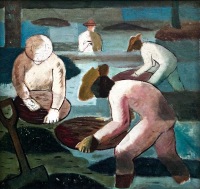
Gaston Leval: Social Reconstruction in Spain (London 1938); quoted in Vernon Richards: Lessons of the Spanish Revolution (London 1983) The mechanism of the formation of the Aragonese collectives has been generally the same. After having overcome the local authorities when they were fascist, or having replaced them by Anti-fascist or Revolutionary committees when they were not, an assembly was summoned of all the inhabitants of the locality to decide on their line of action. One of the first steps was to gather in the crop not only in the fields of the small landowners who still remained, but, what was even more important, also on the estates of the large landowners all of whom were conservatives and rural `caciques' or chiefs. Groups were o... (From : Flag.Blackened.net.)

Published by Freedom Press 27 Red Lion Street, London, W.C.1 July 1945 and printed by Express Printers, London. We are reproducing an abridged version of the first part of Gaston Leval's pamphlet "Social Reconstruction in Spain," which was published by Freedom Press in 1938, but which has since gone out of print. Many readers of "War Commentary" have expressed a desire for the reproduction in some form of the contents of this excellent pamphlet. COLLECTIVES IN SPAIN INDUSTRIAL socialization was the first undertaking of the Spanish Revolution, particularly in Barcelona. But obstacles were created from the beginning, which resulted in preventing these experiments from being developed t... (From : Anarchy Archives.)

V: The Aragon Federation of Collectives: Graus Fraga Binefar Andorra (Teurel) Alcorisa Mas de las Matas Esplus VI: Collectives in the Levante General Charateristics Carcagente Jativa Other Methods of Operation VII: The Collectives of Castile VIII: Collectivist Book-Keeping IX: Libertarian Democracy X: The Charters CHAPTER V THE ARAGON FEDERATION OF COLLECTIVES On February 14 and 15, 1937 the Constitutive Congress of the Aragon Federation of Collectives took place in Caspe, a small town in the province of Saragossa which had been freed of the fascists by forces coming from Catalonia. Twenty-four cantonal federation...

From: Bakunin's Writings, Guy A. Aldred Modern Publishers, Indore Kraus Reprint co. New York 1947 THE COMMUNE, THE CHURCH & THE STATE. I am a passionate seeker for truth and just as strong an opponent of the corrupting lies, through which the party of order-this privileged, official, and interested representative of all religions, philosophical political, legal economical, and social outrage in the past and present-has tried to keep the world in ignorance. I love freedom with all my heart. It is the only condition under which the intelligence, the manliness, and happiness of the people, can develop and expand. By freedom, however, I naturally understand not its mere form, forced down as from above, measured and controlled by the state, ... (From : Anarchy Archives.)

My life came to a standstill. I could breathe, eat, drink, and sleep, and I could not help doing these things; but there was no life, for there were no wishes the fulfillment of which I could consider reasonable. If I desired anything, I knew in advance that whether I satisfied my desire or not, nothing would come of it. Had a fairy come and offered to fulfill my desires I should not have know what to ask. If in moments of intoxication I felt something which, though not a wish, was a habit left by former wishes, in sober moments I knew this to be a delusion and that there was really nothing to wish for. I could not even wish to know the truth, for I guessed of what it consisted. The truth was that life is meaningless. I had as it were lived, lived, and walked, walked, till I had come to a precipice and saw clearly that there was nothing ahead of me but destruction. It was impossible to stop, impossible to go back, and impossible to close my eyes or avoid seeing tha...

The Death Penalty La Peine de Mort Translated by Natalya Ratan and Virginia Anton. By Elisée Reclus I do not have the honor of being a Swiss Citizen and know only imperfectly the means to petition the removal of an article, but it is an issue of human agitation in all civilized countries As an international citizen I have the right to address this issue. Unfortunately I also am French and my motherland is also a country of executioners and the guillotine, that we have invented and use everyday Enemies of the death penalty. I must try to find their origins. Is if justifiable that it takes away from the right to self defense? If it is, it will be difficult to oppose it because we all have the right to self defense, against beasts and a... (From : Anarchy Archives.)

The London School Board have for years past been making themselves generally odious to the people whom they nominally exist to serve, the working classes. When a family can barely scrape together enough to buy food and clothes, and too little of those, it seems hard that the bigger children should be carried off forcibly to school just when they could be earning a shilling or two and so getting something better than bread and tea every day for dinner, something more to nourish their bodies. For after all, in these days of machinery and unskilled labor, it is bodies that count more than minds in getting a job-bodily strength, and that sort of sharpness which does not come from book-learning so much as from knocking about at home and in the s... (From : AnarchyArchives.)

A gray hare was living in the winter near the village. When night came, he pricked one ear and listened; then he pricked his second ear, moved his whiskers, sniffed, and sat down on his hind legs. Then he took a leap or two over the deep snow, and again sat down on his hind legs, and looked around him. Nothing could be seen but snow. The snow lay in waves and glistened like sugar. Over the hare's head hovered a frost vapor, and through this vapor could be seen the large, bright stars. The hare had to cross the highway, in order to come to a threshing-floor he knew of. On the highway the runners could be heard squeaking, and the horses snorting, and seats creaking in the sleighs. The hare again stopped near the road. Peasants were walking beside the sleighs, and the collars of their caftans were raised. Their faces were scarcely visible. Their beards, mustaches, and eyelashes were white. Steam rose from their mouths and noses. Their horses were sweaty, and the hoarf...

In Petersburg in the eighteen-forties a surprising event occurred. An officer of the Cuirassier Life Guards, a handsome prince who everyone predicted would become aide-de-camp to the Emperor Nicholas I. and have a brilliant career, left the service, broke off his engagement to a beautiful maid of honor, a favorite of the Empress’s, gave his small estate to his sister, and retired to a monastery to become a monk. This event appeared extraordinary and inexplicable to those who did not know his inner motives, but for Prince Stepan Kasatsky himself it all occurred so naturally that he could not imagine how he could have acted otherwise. His father, a retired colonel of the Guards, had died when Stepan was twelve, and sorry as his mother was to part from her son, she entered him at the Military College as her deceased husband had intended. The widow herself, with her daughter, Varvara, moved to Petersburg to be near her son and have him with her for the ho...

Peter Nikolaevich Sventizky did his best to discover who had stolen his horses. He knew somebody on the estate must have helped the thieves, and began to suspect all his staff. He inquired who had slept out that night, and the gang of the working men told him Proshka had not been in the whole night. Proshka, or Prokofy Nikolaevich, was a young fellow who had just finished his military service, handsome, and skillful in all he did; Peter Nikolaevich employed him at times as coachman. The district constable was a friend of Peter Nikolaevich, as were the provincial head of the police, the marshal of the nobility, and also the rural councilor and the examining magistrate. They all came to his house on his saint’s day, drinking the cherry brandy he offered them with pleasure, and eating the nice preserved mushrooms of all kinds to accompany the liqueurs. They all sympathized with him in his trouble and tried to help him. “You always used to take the side of the peas...

The text is from my copy of Emma Goldman's Anarchism and Other Essays. Second Revised Edition. New York & London: Mother Earth Publishing Association, 1911. pp. 151-172. FRANCISCO FERRER AND THE MODERN SCHOOL EXPERIENCE has come to be considered the best school of life. The man or woman who does not learn some vital lesson in that school is looked upon as a dunce indeed. Yet strange to say, that though organized institutions continue perpetuating errors, though they learn nothing from experience, we acquiesce, as a matter of course. There lived and worked in Barcelona a man by the name of Francisco Ferrer. A teacher of children he was, known and loved by his people. Outside of Spain only the cultured few knew of Francisco Ferrer's work.... (From : Anarchy Archives.)

In order to understand the social and dynamic significance of modern dramatic art it is necessary, I believe, to ascertain the difference between the functions of art for art's sake and art as the mirror of life. Art for art's sake presupposes an attitude of aloofness on the part of the artist toward the complex struggle of life: he must rise above the ebb and tide of life. He is to be merely an artistic conjurer of beautiful forms, a creator of pure fancy. That is not the attitude of modern art, which is preeminently the reflex, the mirror of life. The artist being a part of life cannot detach himself from the events and occurrences that pass panorama-like before his eyes, impressing themselves upon his emotional and intellectual vision. The modern artist is, in the words of August Strindberg, "a lay preacher popularizing the pressing questions of his time." Not necessarily because his aim is to proselyte, but because he can best express hims...

FREEDOM PAMPHLETS. No. 1. New Edition. 1920. I. REPRESENTATIVE GOVERNMENT AND WAGES. In their plan for the reconstruction of society, the Collectivists commit, in our opinion, a double error. Whilst speaking of the abolition of the rule of capital, they wish, nevertheless, to maintain two institutions which form the very basis of that rule, namely, representative government and the wage system. As for representative government, it remains absolutely incomprehensible to us how intelligent men (and they are not wanting among the Collectivists) can continue to be the partizans of national and municipal parliaments, after all the lessons on this subject bestowed on us by history, whether in England or in France, in Germany, Switzerland or the U... (From : Anarchy Archives.)

It is evident that we are advancing rapidly towards revolution, towards an upheaval that will begin in one country and spread, as in 1848, into all the neighboring lands, and, as it rocks existing society to its foundations, will also reopen the springs of life. To confirm our view, we do not even have to invoke the testimony of a celebrated German historian, or a well-known Italian philosopher, both of whom, having deeply studied the history of our times, have reached the conclusion that a great revolution was inevitable towards the end of this century. We need only watch the panorama that has unrolled before us over the past twenty years; we need only observe what goes on around us. When we do so, we perceive two major facts emerging from the murky depths of the canvas: the awakening of the peoples, in contrast to the moral, intellectual and economic failure of the ruling classes; and the agitated yet powerless efforts of people of wealth to hinder...