
A Tale of 1852Towards evening the master of the house returned from his fishing, and having learned that the cadet would pay for the lodging, pacified the old woman and satisfied Vanyusha's demands. Everything was arranged in the new quarters. Their hosts moved into the winter hut and let their summer hut to the cadet for three rubles a month. Olenin had something to eat and went to sleep. Towards evening he woke up, washed and made himself tidy, dined, and having lit a cigarette sat down by the window that looked onto the street. It was cooler. The slanting shadow of the hut with its ornamental gables fell across the dusty road and even bent upwards at the base of the wall of the house opposite. The steep reed-thatched roof of that house shone in the rays of the setting sun. The air grew fresher. Everything was peaceful in the village. The soldiers had settled down and become quiet. The herds had not yet been driven home and the people had not returned from their work. Olenin's...
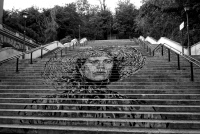
Eclogues, by Herbert Read
ECLOGUES This is the ninth book issued by the Beaumont Press and the fifth printed by hand 30 copies have been printed on Japanese vellum signed by the author and artist and numbered i to 30 50 copies on cartridge paper numbered 31 to 80 and 120 copies on hand-made paper numbered 81 to 200 ECLOGUES A BOOK OF POEMS HERBERT READ CONTENTS THE MEDITATION OF A LOVER I can just see the distant trees ... 9 WOODLANDS Pine needles cover the silent ground: . 10 PASTURELANDS We scurry over the pastures . . . 11 THE POND Shrill green weeds . . . . . 12 THE ORCHARD Grotesque patterns of blue-gray mold . 1 3 APRIL To the fresh wet fields . . , . 14 THE WOODMAN His russet coat and gleaming ax . . 15 HARVEST HOME The wagons loom like blue caravans . (From : Anarchy Archives.)

Christmas came and except for the ceremonial Mass, the solemn and wearisome Christmas congratulations from neighbors and servants, and the new dresses everyone put on, there were no special festivities, though the calm frost of twenty degrees Réaumur, the dazzling sunshine by day, and the starlight of the winter nights seemed to call for some special celebration of the season. On the third day of Christmas week, after the midday dinner, all the inmates of the house dispersed to various rooms. It was the dullest time of the day. Nicholas, who had been visiting some neighbors that morning, was asleep on the sitting-room sofa. The old count was resting in his study. Sónya sat in the drawing room at the round table, copying a design for embroidery. The countess was playing patience. Nastásya Ivánovna the buffoon sat with a sad face at the window with two old ladies. Natásha came into the room, went up to Sónya,...