It must be left to the future historian to determine whether the Bolshevik repression of the bourgeoisie, with which they started, their rule, was not merely a means towards the ulterior purpose of suppressing all the other non-Bolshevik elements. For the Russian bourgeoisie was not really dangerous to the Revolution. As is well known, it was an insignificant minority, unorganized, without definite solidaric interests and entirely powerless. The revolutionary elements, on the contrary, were a real obstacle to the dictatorship of any political party. The elimination of the revolutionary elements would be of prime necessity to any dictatorship, because such a dictatorship would meet with the strongest opposition NOT from the bourgeoisie but f... (From : Anarchy Archives.)

January 20, 1920.---Late in the afternoon yesterday we touched the soil of Soviet Russia. Driven out from the United States like criminals, we were received at Belo-Ostrov with open arms. The revolutionary hymn, played by the military Red Band, greeted us as we crossed the frontier. The hurrahs of the red-capped soldiers, mixed with the cheers of the deportees, echoed through the woods, rolling into the distance like a challenge of joy and defiance. With bared head I stood in the presence of the visible symbols of the Revolution Triumphant. A feeling of solemnity, of awe overwhelmed me. Thus my pious old forefathers must have felt on first entering the Holy of Holies. A strong desire was upon me to kneel down and kiss the ground --- the ground consecrated by the life-blood of generations of suffering and martyrdom, consecrated anew by the revolutionists of my own day. Never before, not even at the first caress of freedom on that glorious May day, 1906 --- af...

Last Message to the People of America
INTRODUCTION. WITH pencil and scraps of paper concealed behind the persons of friends who had come to say good-bye at the Ellis Island Deportation Station, Alexander Berkman hastily scribbled the last lines of this pamphlet. I THINK it is the best introduction to this pamphlet to say that before its writing was finished the rulers of America began deporting men directly and obviously for the offense of striking against the industrial owners of America. THE "Red Ark" is gone. In the darkness of early morning it slipped away, leaving behind many wives and children destitute of support. They were denied even the knowledge of the sailing of the ship, denied the right of farewell to the husbands and fathers they may never see again. After the bo... (From : Anarchy Archives.)

From my copy of Alexander Berkman's The Kronstadt Rebellion, Berlin: Der Sindikalist, 1922. Russian Revolution Series The Kronstadt Rebellion By Alexander Berkman Fifteen Cents 1922 I. LABOR DISTURBANCES IN PETROGRAD It was early in 1921. Long years of war, revolution, and civil struggle had bled Russia to exhaustion and brought her people to the brink of despair. But at last civil war was at an end: the numerous fronts were liquidated, and Wrangel -- the last hope of Entente intervention and Russian counter-revolution -- was defeated and his military activities within Russia terminated. The people now confidently looked forward to the mitigation of the severe Bolshevik régime. It was expected that with the end of civil war the Commu... (From : Anarchy Archives.)

Living My Life by Emma Goldman Volume one New York: Alfred A Knopf Inc., 1931. Chapter 2 I had worked in factories before, in St. Petersburg. In the winter of 1882, when my Mother, my two little brothers, and I came from Königsberg to join Father in the Russian capital, we found that he had lost his position. He had been manager of his cousin's dry goods store; but, shortly before our arrival, the business failed. The loss of his job was a tragedy to our family, as Father had not managed to save anything. The only bread-winner left was Helena. Mother was forced to turn to her brothers for a loan. The three hundred rubles they advanced were invested in a grocery store. The business yielded little at first, and is became necessary for me to find employment. Knitted shawls were then much in vogue, and a neighbor told my mother where I might find work to do at home. B...

CHAPTER VIII THE FIRST OF MAY IN PETROGRAD In 1890 the First of May was for the first time celebrated in America as Labor's international holiday. May Day became to me a great, Inspiring event. To witness the celebration of the First of May in a free country-it was something to dream of, to long for, but perhaps never to be realized. And now, in 1920, the dream of many years was about to become real in revolutionary Russia. I could hardly await the morning of May First. It was a glorious day, with the warm sun melting away the last crust of the hard winter. Early in the morning strains of music greeted me: groups of workers and soldiers were marching through the streets, singing revolutionary songs. The city was gaily decorated: the Uritski Square, facing the Winter Palace, was a mass of red, the streets near by a veritable riot of color. Great crowds were about, all wending their way to the Field of Mars where the heroes of the Revolution were buried.

MY FURTHER DISILLUSIONMENT IN RUSSIA By Emma Goldman, Garden City, NY: Doubleday, Page & Company; 1924 CHAPTER II RETURNING TO MOSCOW In a country where speech and press are so completely suppressed as in Russia it is not surprising that the human mind should feed on fancy and out of it weave the most incredible stories. Already, during my first months in Petrograd, I was amazed at the wild rumors that circulated in the city and were believed even by intelligent people. The Soviet press was inaccessible to the population at large and there was no other news medium. Every morning Bolshevik bulletins and papers were pasted on the street corners, but in the bitter cold few people cared to pause to read them. Besides, there was little faith in the Communist press. Petrograd was therefore completely cut off, not only from the Western world but even from the rest of Russia. An old revolutionist once said to me: "We not onl...

March is a historic month: in the struggle of mankind against the power of darkness and oppression it has frequently played a very significant role. But the most important March event of modern times is of comparatively recent date. It took place in Russia just ten years ago in 1921, and is known as the Kronstadt Rebellion. In many of its characteristics the Kronstadt Rebellion had great similarity with another great historic uprising, namely that of the proletariat of Paris in 1870, which is known as the Paris Commune. The month of March is the anniversary of the Paris Commune, as well the as the Kronstadt Rebellion, and it is fitting that the two great events be celebrated at the same time. I say " celebrated" advisedly. For though Kronst... (From : Anarchy Archives.)
PREFACE Clarity of ideas is not characteristic of the average mind. Many people still continue to think and to talk of the Russian Revolution and of the Bolsheviki as if the two were identical. In other words, as if nothing had happened in Russia during the last three years. The great need of the present is to make clear the difference between that grand social event and the ruling, political party --- a difference as fundamental as it has been fatal to the Revolution. The following pages present a clear and historically true picture of the ideals that inspired the Revolution, and of the role played by the Bolsheviki. This pamphlet conclusively proves what the Russian Revolution IS and what the BoIshevik State, alias the Communist Party, IS... (From : Anarchy Archives.)
The Russian Revolution Series No.1 The RUSSIAN TRAGEDY (A Review and An Outlook) by Alexander Berkman FOREWORD We live at a time when two civilizations are struggling for their existence. Present society is at death grips with the New Ideal. The Russian Revolution was but the first serious combat of the two forces, whose struggle must continue till the final triumph of the one or of the other. The Russian Revolution has failed - failed of its ultimate purpose. But that failure is a temporary one. In the point of revolutionizing the thought and feeling of the masses of Russia and of the world, in undermining the fundamental concepts of existing society, and lighting the torch of faith and hope for the Better Day, the Russian Revolution has b... (From : Anarchy Archives.)

Published Essays and Pamphlets Samuel Gompers by Emma Goldman [Published in The Road to Freedom (New York), Vol. 1, March 1925.] The numerous tributes paid to the late President of the American Federation of Labor, emphasized his great leadership. "Gompers was a leader of men," they said. One would have expected that the disaster brought upon the world by leadership would have proven that to be a leader of men is far from a virtue. Rather is it a vise for which those who are being led are usually made to pay very heavily. The last fifteen years are replete with examples of what the leaders of men have done to the peoples of the world. The Lenins, Clemenceaus, the Lloyd Georges and Wilson, have all posed as great leaders. Yet they have broug... (From : Anarchy Archives.)
It is only a few months now to the tenth anniversary of the October Revolution. Great preparations are being made by the Communist Party and Government of Russia for the celebration of the important event. Numerous committees are at work to make the day the most memorable in the annals of Soviet Russia, and to demonstrate to the country and to the world at large the achievements of the first decade of Bolshevik rule. There is no doubt that the October Revolution was the most significant social upheaval known in human history. It broke all the molds of established society - not merely political forms, as was the case in previous revolutions, but the very economic foundations that support human slavery and oppression. The spiritual achievemen... (From : Anarchy Archives.)
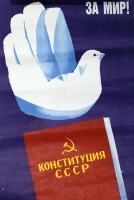
There Is No Communism in Russia By Emma Goldman Communism is now on everybody's lips. Some talk of it with the exaggerated enthusiasm of a new convert, others fear and condemn it as a social menace. But I venture to say that neither its admirers—the great majority of them—nor those who denounce it have a very clear idea of what Bolshevik Communism really is. Speaking generally, Communism is the ideal of human equality and brotherhood. It considers the exploitation of man by man as the source of all slavery and oppression. It holds that economic inequality leads to social injustice and is the enemy of moral and intellectual progress. Communism aims at a society where classes have been abolished as a result of common ownership of ... (From : hartford-hwp.com.)

TROTSKY PROTESTS TOO MUCH By Emma Goldman . PRICE TWOPENCE In America Five Cents Published by THE ANARCHIST COMMUNIST FEDERATION INTRODUCTION. This pamphlet grew out of an article for Vanguard, the Anarchist monthly published in New York City. It appeared in the July issue, 1938, but as the space of the magazine is limited, only part of the manuscript could be used. It is here given in a revised and enlarged form. Leon Trotsky will have it that criticism of his part in the Kronstadt tragedy is only to aid and abet his mortal enemy, Stalin. It does not occur to him that one might detest the savage in the Kremlin and his cruel regime and yet not exonerate Leon Trotsky from the crime against the sailors of Kronstadt. In point of trut... (From : Anarchy Archives.)

Chapter 2. Anarchist Position on the October Revolution On the same day, the Union for Anarcho-Syndicalist Propaganda published a statement in Golos Truda in which it indicated clearly its position on the question of political power. It summed up the situation in two compact paragraphs: “1. Inasmuch as we give the slogan ‘All power to the Soviets’, an entirely different meaning from that which, in our opinion, is given by the Social Democratic Bolshevik Party, ‘called upon by events to lead the movement’; inasmuch as we do not believe in the broad perspectives of a revolution which begins with a political act, that is, by the taking of power; inasmuch as we do not support any action of the masses for political goals and under the control of a political party; and finally, inasmuch as we conceive of an entirely different way, both for the beginning and the subsequent development of a real social revolution,...

Now and After: The ABC of Communist AnarchismYes, you are right: the law forbids theft. If I should steal something from you, you can call a policeman and have me arrested. The law will punish the thief, and the government will return to you the stolen property, if possible, because the law forbids stealing. It says that no one has a right to take anything from you without your consent. But your employer takes from you what you produce. The whole wealth produced by labor is taken by the capitalists and kept by them as their property. The law says that your employer does not steal anything from you, because it is done with your consent. You have agreed to work for your boss for certain pay, he to have all that you produce. Because you consented to it, the law says that he does not steal anything from you. But did you really consent? When the highwayman holds his gun to your head, you turn your valuables over to him. You 'consent' all right, but you do so because you cannot help yoursel...