
In Petersburg in the eighteen-forties a surprising event occurred. An officer of the Cuirassier Life Guards, a handsome prince who everyone predicted would become aide-de-camp to the Emperor Nicholas I. and have a brilliant career, left the service, broke off his engagement to a beautiful maid of honor, a favorite of the Empress’s, gave his small estate to his sister, and retired to a monastery to become a monk. This event appeared extraordinary and inexplicable to those who did not know his inner motives, but for Prince Stepan Kasatsky himself it all occurred so naturally that he could not imagine how he could have acted otherwise. His father, a retired colonel of the Guards, had died when Stepan was twelve, and sorry as his mother was to part from her son, she entered him at the Military College as her deceased husband had intended. The widow herself, with her daughter, Varvara, moved to Petersburg to be near her son and have him with her for the ho...
The month of October 1917 is a great historical watershed in the Russian revolution. That watershed consists of the awakening of the toilers of town and country to their right to seize control of their own lives and their social and economic inheritance; the cultivation of the soil, the housing, the factories, the mines, transportation, and lastly the education which had hitherto been used to strip our ancestors of all these assets. However, as we see it, it would be wide of the mark if we were to see all of the content of the Russian revolution encapsulated in October: in fact, the Russian revolution was hatched over the preceding months, a period during which the peasants in the countryside and the workers in the towns grasped the essenti... (From : NestorMakhno.info.)
Translators Introduction The Ukrainian peasant anarchist Nestor Makhno visited Moscow in June 1918 and was granted extensive interviews with the Bolshevik leaders Sverdlov and Lenin. Many years later Makhno, an exile in France, wrote his memoirs of the tumultuous years 1917-18. "My Visit to the Kremlin" is a translation of the two chapters which deal with his encounters with the Bolshevik titans. Excerpts from these interviews have been quoted in various works in English but the full account was presented here for the first time . (i) (This pamphlet was sent by us to a Moscow publisher in 1992 and will appear in a re-translated edition in Russia for the first time simultaneously with this new edition - 1993 note). Moscow in June 1918 In Jun... (From : NestorMakhno.info.)

The proclamation of the 1883 Congress of the International Working Peoples' Association, taken from the English edition of Freiheit, 27 December 1890. - Johann Joseph Most The Pittsburgh Proclamation Comrades! In the Declaration of Independence of the United States we read: "When in a long Train of Abuses and Usurpations, pursuing invariably the same Object, evinces a Design to reduce them under absolute Despotism, it is their Right, it is their Duty, to throw off such Government, and to provide new Guards for their future Security." Has the moment not arrived to heed the advice of Thomas Jefferson, the true founder of the American Republic? Has government not become oppression? And is our government anything but a conspiracy of the ruling ... (From : Anarchy Archives.)
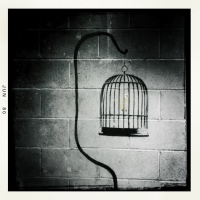
The hours at work help to dull the acute consciousness of my environment. The hosiery department is past the stage of experiment; the introduction of additional knitting machines has enlarged my task, necessitating increased effort and more sedulous application. The shop routine now demands all my attention. It leaves little time for thinking or brooding. My physical condition alarms me: the morning hours completely exhaust me, and I am barely able to keep up with the line returning to the cellhouse for the noon meal. A feeling of lassitude possesses me, my feet drag heavily, and I experience great difficulty in mastering my sleepiness. I have grown indifferent to the meals; the odor of food nauseates me. I am nervous and morbid: the sight of a striped prisoner disgusts me; the proximity of a guard enrages me. The shop officer has repeatedly warned me against my disrespectful and surly manner. But I am indifferent to consequences: what matter what ha...

Sabotage - by Elizabeth Gurley Flynn Originally published as SABOTAGE, THE CONSCIOUS WITHDRAWAL OF THE WORKERS' INDUSTRIAL EFFICIENCY, in October, 1916, by the IWW publishing bureau, in Cleveland, Ohio. It was later withdrawn from the IWW's official litearture. The pampahlet originally sold for 10 cents. Disclaimer: The following document is presented for historical purposes and in the interest of the freedom of speech. The IWW takes no official position on sabotage (i.e. the IWW neither condones nor condemns such actions). Workers who engage in some of the following forms of sabotage risk legal sanctions. Elizabeth Gurley-Flynn's Introduction: The interest in sabotage in the United States has developed lately on account of the case of Frederick Sumner Boyd in the state of New Jersey as an aftermath of the Paterson strike. Before his arrest and convictio...

At the levee Prince Andrew stood among the Austrian officers as he had been told to, and the Emperor Francis merely looked fixedly into his face and just nodded to him with his long head. But after it was over, the adjutant he had seen the previous day ceremoniously informed Bolkónski that the Emperor desired to give him an audience. The Emperor Francis received him standing in the middle of the room. Before the conversation began Prince Andrew was struck by the fact that the Emperor seemed confused and blushed as if not knowing what to say. “Tell me, when did the battle begin?” he asked hurriedly. Prince Andrew replied. Then followed other questions just as simple: “Was Kutúzov well? When had he left Krems?” and so on. The Emperor spoke as if his sole aim were to put a given number of questions—the answers to these questions, as was only too evident, did not interest him. “At what o&rsqu...