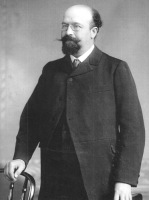
Carl Levy

1951 — ?

Entry 7334

Public

From: holdoffhunger [id: 1]
(holdoffhunger@gmail.com)

../ggcms/src/templates/revoltlib/view/display_childof_people.php

Untitled People Carl Levy

Not Logged In: Login?

0
0
Comments (0)
Images (1)
Works (5)
Permalink

On : of 0 Words

About Carl Levy

Carl Levy is professor of politics at Goldsmith's College, University of London. He is a specialist in the history of modern Italy and the theory and history of anarchism.

From : Wikipedia.org

Works

Back to Top

This person has authored 0 documents, with 0 words or 0 characters.

Abstract Until recently, the relationship between theories of international anarchy and anarchism has been ignored. Very recent work has started to bridge the gap between International Relations theory and the usefulness of anarchism and anarchist theory for the understanding of global politics. This article takes this discussion one step further by examining the relationship between classical anarchism (1860s–1940s), cosmopolitanism, post-anarchism and the global justice movement. It then investigates the linkages between the works of the 19th- and 20th-century anarchists, Rudolf Rocker and Gustav Landauer, and contemporary examinations of the linkages between cultural nationalism, cosmopolitanism and the classical and post-an... (From: TheAnarchistLibrary.org.)
[1] Sydney, c. late 1970s, original emphasis. [2] Nicolas Walter, “Has Anarchism Changed? Part Two Concluded,” Freedom, 10 July 1976, p.13. [3] Both ‘carnival anarchism’ and ‘anarchist councilism’ were not original discoveries of the 1960s. As David Berry notes, many French anarchist communists in the late 1910s and early 1920s adhered to a “council anarchism” or “sovietism” David Berry, A History of the French Anarchist Movement 1917—1945, Westport: Greenwood Press, 2002, pp.47–72. Similarly, it is often claimed that classical council communists adopted anarchist views — for example, Philippe Bourrinet argues that in the 1930s and 1940s Dutch council co... (From: TheAnarchistLibrary.org.)
3. Anarchism, Individualism and Communism: William Morris’s Critique of Anarcho-communism Ruth Kinna Introduction William Morris’s commitment to revolutionary socialism is now well established, but the nature of his politics, specifically his relationship to Marxism and anarchist thought, is still contested. Perhaps, as Mark Bevir has argued, the ideological label pinned to Morris’s socialism is of ‘little importance’ for as long as his political thought is described adequately. Nevertheless, the starting point for this essay is that thinking about the application of ideological descriptors is a useful exercise and one which sheds important light on Morris’s socialism and the process of ide... (From: TheAnarchistLibrary.org.)
III 12. Production and Distribution One must produce, say the government and the bourgeoisie. One must produce, say the reformists. One must produce, we (anarchists) also say. But produce for whom? Produce what? And what are the reasons that not enough is produced? They say, the revolution cannot take place because production is insufficient, and that we would run the risk of dying of hunger. We say, the revolution must take place so as to be able to produce and stop the greater part of the population from living in a state of chronic hunger.[121] … Arturo Labriola, the well known Italian intransigent socialist, maintained at a public meeting some time ago that “the urgent pro... (From: TheAnarchistLibrary.org.)
Introduction: Overview This article is a synoptic overview of a larger project on the social histories of anarchism from the eighteenth century to the present. The specific themes of this article are a discussion of the periodization of anarchism as an ism, an ideology originating in nineteenth-century Europe, and its relationship to and differences with more general libertarian or noncoercive modes of behavior and organization found in all human societies. Secondly, the dissemination of anarchism (and syndicalism) throughout the globe and thus the role of the Global South in the history of anarchism will be surveyed. This article focuses on the period of classical anarchism (1860s to 1940s) and therefore discusses the differences be... (From: TheAnarchistLibrary.org.)

Image Gallery of Carl Levy

Chronology

Back to Top
An icon of a baby.
1951
Birth Day.

An icon of a news paper.
January 28, 2021; 3:49:38 PM (UTC)
Added to http://revoltlib.com.

An icon of a red pin for a bulletin board.
January 10, 2022; 11:59:26 AM (UTC)
Updated on http://revoltlib.com.

Comments

Back to Top
0 Likes
0 Dislikes

No comments so far. You can be the first!

Navigation

Back to Top