
THE ANT AND THE DOVE An Ant came down to the brook: he wanted to drink. A wave washed him down and almost drowned him. A Dove was carrying a branch; she saw the Ant was drowning, so she cast the branch down to him in the brook. The Ant got up on the branch and was saved. Then a hunter placed a snare for the Dove, and was on the point of drawing it in. The Ant crawled up to the hunter and bit him on the leg; the hunter groaned and dropped the snare. The Dove fluttered upwards and flew away. THE TURTLE AND THE EAGLE A Turtle asked an Eagle to teach her how to fly. The Eagle advised her not to try, as she was not fit for it; but she insisted. The Eagle took her in his claws, raised her up, and dropped her: she fell on stones and broke to pieces. THE POLECAT A Polecat entered a smithy and began to lick the filings. Blood began to flow from the Polecat's mouth, but he was glad and continued to lick; he thought that the blood was comin...

VI. --- REFORMATION. Under Henry VIII there was a new departure in Irish legislation. A species of Liberalism was evolved, no doubt the progenitor of what we know to-day by that name, a liberality that gave in order that it might take with a greater impunity. Henry VII., as we have seen, went in for coercion on a cheap scale by giving unlimited power to the noble who could best keep his fellows in check, requiring in return only a nominal allegiance. The rebellious disorder in Ireland had been more than once flung tauntingly in the faces of English ambassadors, when assent-bliss of the European crowned bullies met to concert plans of "robbery with violence." It was impossible for Henry VIII., who bad set the Pope and all Christendom at defi... (From : AnarchyArchives.)
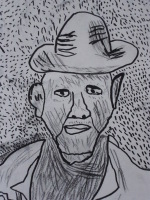
Nekhliudof went into the hut. The uneven smoke-begrimed walls of the dwelling were hung with various rags and clothes; and, in the living-room, were literally covered with reddish cockroaches clustering around the holy images and benches. In the middle of this dark, fetid apartment, not fourteen feet square, was a huge crack in the ceiling; and in spite of the fact that it was braced up in two places, the ceiling hung down so that it threatened to fall from moment to moment. "Yes, the hut is very miserable," said the bárin, looking into the face of Churis, who, it seems, had not cared to speak first about this state of things. "It will crush us to death; it will crush the children," said the woman in a tearful voice, attending to the stove which stood under the loft. "Hold your tongue," cried Churis sternly; and with a slight smile playing under his mustaches, he turned to the master. "And I haven't the wit to know what's to be done with it,...