
A French writer, sympathetic to anarchism, wrote in the 1890s that "anarchism has a broad back, like paper it endures anything"---including, he noted those whose acts are such that "a mortal enemy of anarchism could not have done better." There have been many styles of thought and action that have been referred to as "anarchist." It would be hopeless to try to encompass all of these conflicting tendencies in some general theory or ideology. And even if we proceed to extract from the history of libertarian thought a living, evolving tradition, as Daniel Guérin does in Anarchism, it remains difficult to formulate its doctrines as a specific and determinate theory of society and social change. The anarchist historian Rudolph Rocker, who presents a systematic conception of the development of anarchist thought towards anarchosyndicalism, along lines that bear comparison to Guérins work, puts the matter well when he writes that anarchism is not a fixed, self-enc...
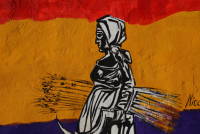
CONTROVERSY: ANARCHISTS IN THE SPANISH REVOLUTION by Sam Dolgoff In 1974, or early 1975, I reviewed in the English anarchist paper Freedom a book by Carlos Semprun Maura, Revolution and Counter-Revolution in Catalonia (French edition). In my review I criticized both Semprun Maura and Vernon Richards' book Lessons of the Spanish Revolution for presenting a distorted, over-simplified interpretation of events- a scenario. This provoked a heated rejoinder from Richards (three or four articles in Freedom). Over forty years after the tragic defeat of the Spanish Revolution - 1936 to 1939 - the question of anarchist participation in the Republican government and the role of anarchists in a revolution is a fundamental problem still debated- still r... (From : Flag.Blackened.net.)

V: The Aragon Federation of Collectives: Graus Fraga Binefar Andorra (Teurel) Alcorisa Mas de las Matas Esplus VI: Collectives in the Levante General Charateristics Carcagente Jativa Other Methods of Operation VII: The Collectives of Castile VIII: Collectivist Book-Keeping IX: Libertarian Democracy X: The Charters CHAPTER V THE ARAGON FEDERATION OF COLLECTIVES On February 14 and 15, 1937 the Constitutive Congress of the Aragon Federation of Collectives took place in Caspe, a small town in the province of Saragossa which had been freed of the fascists by forces coming from Catalonia. Twenty-four cantonal federation...

I. THE PLACE OF THE COMMUNE IN SOCIALIST EVOLUTION On March 18, 1871, the people of Paris rose against a despised and detested government, and proclaimed the city independent free, belonging to itself. This overthrow of the central power took place without the usual stage effects of revolution, without the firing of guns, without the shedding of blood upon barricades. When the armed people came out into the streets, the rulers fled away, the troops evacuated the town, the civil functionaries hurriedly retreated to Versailles carrying everything they could with them. The government evaporated like a pond of stagnant water in a spring breeze, and on the nineteenth the great city of Paris found herself free from the impurity which had defiled ... (From : Anarchy Archives.)

THE CONQUEST OF BREAD by P. Kropotkin CHAPTER V Food I IF the coming Revolution is to be a Social Revo lution it will be distinguished from all former uprisings not only by its aim, but also by its methods. To attain a new end, new means are required. The three great popular movements which we have seen in France during the last hundred years differ from each other in many ways, but they have one common feature. In each case the people strove to overturn the old regime, and spent their heart's blood for the cause. Then, after having borne the brunt of the battle, they sank again into obscurity. A Government, composed of men more or less honest, was formed and undertook to organize--the Republic in 1793, Labor in 1848, and the Free Commune in 1871. Imbued with Jacobin ideas, this Government occupied itself first of all with politic...

The greatest excitement has prevailed in Russia for the last few weeks since it became known that representatives of the Zemstvos of thirty-four provinces of the Empire were going to meet at St. Petersburg in order to discuss the necessary reforms in the general political organization of the country. The very fact that such an authorization had been granted was equivalent to an invitation to discuss a scheme of a Constitution; and so it was understood everywhere. When the Zemstvo delegates were leaving their respective provincial towns they were sent off by groups of enthusiastic friends, whose parting words were: 'Return with a Constitution!' Their original intention was to make of their conference a solemn official gathering which would s... (From : Anarchy Archives.)

On October 12 Dr. Merlino opened the meeting by reading a paper on "The Organization of Labor." He dwelt upon the necessity of revising the whole system of the production of the necessaries of life, and pointed out that if this was done by a government it would be an artificial organization of labor, whereas in a period of the development of society a free-handed policy was a necessity. Of course the usual objection would be made to this opinion. It would be asked, How without a central government can the workmen organize themselves? What would be their guides? He replied, reason and interest. People would begin to use their reason and to trust in it more than they do at the present day. It was necessary that people should know something of... (From : AnarchyArchives.)

"A Ia Bastilie!" -- Importance of Bastille -- Popular hatred of prison -- Guns taken from Hôtel des Invalides-Deputations sent to do Launey -- Attack on Bastille begins -- Defenders fire on people -- Another deputation sent -- Firing continues -- Cannon arrives for people -- Garrison capitulates -- Deaths of de Launey and Flesselles-First victory of people From the dawn of July 14, the attention of the Paris insurrection was directed upon the Bastille, that gloomy fortress with its solid towers of formidable height which reared itself among the houses of a populous quarter at the entrance of the Faubourg Saint-Antoine. Historians are still inquiring how the thoughts of the people came to be turned in this direction, and some of them suggest that it was the Permanent Committee at the Hôtel de Ville, who wanted to furnish an objective for the insurrection in directing it against this emblem of royalty. There is n...
From my copy of Alexander Berkman's The Kronstadt Rebellion, Berlin: Der Sindikalist, 1922. Russian Revolution Series The Kronstadt Rebellion By Alexander Berkman Fifteen Cents 1922 I. LABOR DISTURBANCES IN PETROGRAD It was early in 1921. Long years of war, revolution, and civil struggle had bled Russia to exhaustion and brought her people to the brink of despair. But at last civil war was at an end: the numerous fronts were liquidated, and Wrangel -- the last hope of Entente intervention and Russian counter-revolution -- was defeated and his military activities within Russia terminated. The people now confidently looked forward to the mitigation of the severe Bolshevik régime. It was expected that with the end of civil war the Commu... (From : Anarchy Archives.)

Is there actually an economic revolution now going on in Mexico? If so, how is it working itself out; what led to it; what are its prospects, and what will be the probable result of failure or success? These are the points that will be considered in this pamphlet. First, as to the existence of the revolution. As to this one would suppose there could be no doubt; and there would be none, were it not that an immense number of persons, who control nearly all the avenues of publication, tire interested vitally in representing all as lovely in the country ruled until recently by Diaz. According to the apparently careful investigations of John Kenneth Turner, as set out in "Barbarous Mexico," American capitalists have a trifling stake of $900,000... (From : Google Books.)
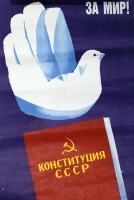
There Is No Communism in Russia By Emma Goldman Communism is now on everybody's lips. Some talk of it with the exaggerated enthusiasm of a new convert, others fear and condemn it as a social menace. But I venture to say that neither its admirers—the great majority of them—nor those who denounce it have a very clear idea of what Bolshevik Communism really is. Speaking generally, Communism is the ideal of human equality and brotherhood. It considers the exploitation of man by man as the source of all slavery and oppression. It holds that economic inequality leads to social injustice and is the enemy of moral and intellectual progress. Communism aims at a society where classes have been abolished as a result of common ownership of ... (From : hartford-hwp.com.)

If the economic situation of Europe can be summed up in these words-industrial and commercial chaos and the failure of capitalist production-the situation in politics can be defined as the rapid breakdown of the State and its entire failure, which will take place very soon. Consider all the various States, from the police autocracy of Russia to the bourgeois oligarchy of Switzerland, and you will not find a single example today (with the possible exception of Sweden and Norway) of a State that is not set on an accelerating course towards disintegration and eventually, revolution. Like wornout old men, their skin shriveled and their feet stumbling, gnawed at by mortal sicknesses, incapable of embarking on the tide of new ideas, the States of Europe squander what strength remains to them, and while living on credit of their past, they merely hasten their ends by squabbling like aged gossips. Having reached a high point in the eighteenth cen...

INTRODUCTORY REMARKS. (A Paper read by Dr. Merlino at the October Freedom Discussion Meeting.) We now enter upon the crucial point of all socialistic systems-the Organization of Labor-the great problem with which we shall be confronted at the breakdown of the capitalistic system. We will first take a general view of what the future organization of labor may be. If we allow a central government, or any authority whatever, to exist and regulate our affairs, we have no natural but an artificial system of production and distribution enforced, a system which will be held by the men who profit by it, as consented to by all members of society, irrevocable at least for a time, and vesting rights in themselves. These rights they will be by and by pr... (From : AnarchyArchives.)