From: Bakunin on Anarchy, translated and edited by Sam Dolgoff, 1971. Letter to the Comrades of the Jura Federation Mikhail Bakunin 1873 October 12, 1873 October 12, 1873 I cannot retire from public life without addressing to you .these few parting words of appreciation and sympathy. ... in spite of all the tricks of our enemies and the infamous slanders they have spread about me, your esteem, your friendship, and your confidence in me have never wavered. Nor have you allowed yourselves to be intimidated when they brazenly accused you of being "Bakuninists," hero-worshipers, mindless followers... You have to the highest degree always conscientiously maintained the independence of your opinions and the spontaneity of your acts; the perfidious plots of our adversaries were so transparent that you could regard their infamous insinuations only with the most profound disgust... (From : Anarchy Archives.)
Source: Western Socialist, Boston, USA, September-October 1956; Transcribed: by Adam Buick. Toynbee and History. Critical Essays and Reviews. Edited by M. F. Ashley Montagu. Porter Sargent Publishers, Boston, 1956, pp. 285; $5.00 Thirty experts in fields related to A Study of History here give their critical appraisals of Toynbee’s monumental work. They all admire Toynbee’s great erudition and industry even though he is full of misinterpretations, factual errors and “proves exactly nothing.” For one reviewer, the Study is “a house of many mansions, all impressive, many beautiful, but built on sand.” Although Toynbee speaks in the name of science and empiricism, he bases his work “on values that are subjective and unverifiable.” Toynbee’s depreciation of the material aspects of civilizations and his mystical orientation, it i... (From : Marxists.org.)
This past May, the Italian state began another round of repression against anarchists. The more sporadic state harassment anarchists had experienced over the past few years gave way to what is clearly a more focused attack. This reflects the growing repressive reality around the globe, the needs of the Italian state in the present circumstances and its attempts to find ways to strike the anarchist movement and all anti-institutional movements of resistance and revolt in their totality. Thus, these events demand more than news and calls for solidarity; they require an attempt to analyze the situation on several levels in order to develop meaningful and substantial forms of active solidarity. The May arrests Perhaps it would be most accurate to see the arrest of Francesco Gioia in Barcelona Spain on May 11 as the beginning of this wave of repression. Francesco is an anarchist from the Italian group II Silvestre. He was placed under house arrest last year... (From : TheAnarchistLibrary.org.)
A review of The Paradise within the Reach of all Men, without Labor, by Powers of Nature and Machinery: An Address to all intelligent men, in two parts by J.A. Etzler . We learn that Mr. Etzler is a native of Germany, and originally published his book in Pennsylvania, ten or twelve years ago; and now a second English edition, from the original American one, is demanded by his readers across the water, owing, we suppose, to the recent spread of Fourier’s doctrines. It is one of the signs of the times. We confess that we have risen from reading this book with enlarged ideas, and grander conceptions of our duties in this world. It did expand us a little. It is worth attending to, if only that it entertains large questions. Consider what Mr. Etzler proposes: “Fellow-men! I promise to show the means of creating a paradise within ten years, where everything desirable... (From : TheAnarchistLibrary.org.)
A chaos of beings, of acts and ideas; a disordered, bitter, merciless struggle; a perpetual lie, a blindly spinning wheel, one day placing someone at the pinnacle, and the next day crushing him: these are just a few of the images that depict current society, if it were possible for it to be depicted. The brush of the greatest of painters and the pen of the greatest of writers would splinter like glass if we were to employ them to express even a distant echo of the tumult and melee that the is depicted by the clash of appetites, aspirations, hatreds and devotions that collide and mix together the different categories among which men are parceled out. Who will ever precisely express the unfinished battle between private interests and collective needs? The sentiments of individuals and the logic of generalities? All of this makes up current society, and none of this suffices to describe it. A minority which possesses the faculty to produce and consume and the possibil... (From : TheAnarchistLibrary.org.)
(1876 - 1933)
Victor Méric is the pseudonym of Henri Coudon (10 May 1876 – 10 October 1933), a French journalist and libertarian author. He contributed to various anarchist journals before World War I (1914–18). Despite being a pacifist, he served in the army during the war. Afterwards he joined the French Communist Party, but was expelled in 1923 for his pacifist convictions. He wrote a number of books, both fiction and nonfiction, and founded the Ligue internationale des combattants de la paix (LICP: International League of Fighters for Peace). (From : Wikipedia.org.)
Translator of Leo Tolstoy. (From : RevoltLib.com.)
(1846 - 1892)
Carlo Cafiero (1 September 1846 – 17 July 1892) was an Italian anarchist, champion of Mikhail Bakunin during the second half of the 19th century and one of the main proponents of anarcho-communism and insurrectionary anarchism during the First International. (From : Wikipedia.org.)
(1990 - )
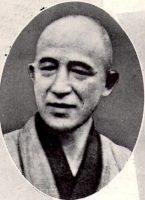
Keiji Nishitani (西谷 啓治, Nishitani Keiji, February 27, 1900 – November 24, 1990) was a Japanese philosopher of the Kyoto School and a disciple of Kitarō Nishida. In 1924 Nishitani received his doctorate from Kyoto Imperial University for his dissertation "Das Ideale und das Reale bei Schelling und Bergson". He studied under Martin Heidegger in Freiburg from 1937 to 1939. (From : Wikipedia.org.)
(1816 - 1898) ~ American Anarchist, Individualist, Inventor, and Land Reformer : Joshua King Ingalls (July 16, 1816 – 1898), born in Swansea, Massachusetts, was an inventor, and land reformer who influenced contemporary individualist anarchists despite never self-identifying as one. He was an associate of Benjamin Tucker and the "Boston anarchists." (From : Wikipedia.)
He believed that government protection of idle land was the foundational source of all limitations on individual liberty. This was in disagreement with Tucker who, while also opposing protection of idle land, believed that government protection of the "banking monopoly" was the greatest evil. (From : Wikipedia.)
Our reformers have suddenly made a great discovery--the white slave traffic. The papers are full of these "unheard-of conditions," and lawmakers are already planning a new set of laws to check the horror. It is significant that whenever the public mind is to be diverted from a great social wrong, a crusade is inaugurated against indecency, gambling, saloons, etc. And what is the result of such crusades? Gambling is increasing, saloons are doing a lively business through back entrances, prostitution is at its height, and the system of pimps and cadets is but aggravated. How is it that an institution, known almost to every child, should have been discovered so suddenly? How is it that this evil, known to all sociologists, should now be made such an important issue? To assume that the recent investigation of the white slave traffic (and, by the way, a very superficial investigation) has discovered anything new, is, to say the least, very foolish. Pros... (From : Anarchy Archives.)
With Strictures On Political And Moral SubjectsIn the present state of society, it appears necessary to go back to first principles in search of the most simple truths, and to dispute with some prevailing prejudice every inch of ground. To clear my way, I must be allowed to ask some plain questions, and the answers will probably appear as unequivocal as the axioms on which reasoning is built; though, when entangled with various motives of action, they are formally contradicted, either by the words or conduct of men. In what does man's preeminence over the brute creation consist? The answer is as clear as that a half is less than the whole; in Reason. What acquirement exalts one being above another? Virtue; we spontaneously reply. For what purpose were the passions implanted? That man by struggling with them might attain a degree of knowledge denied to the brutes: whispers Experience. Consequently the perfection of our nature and capability of happiness, m...
To the Editor of The Open Court: Possessed of rather more than ordinary interest in the sex question, and agreeing with Professor Cope that any proposition for the amelioration of the condition of women should be discussed and decided by women, I am moved to certain remarks suggested by his article on “The Material Relations of Sex” in the first number of The Monist. All through its perusal I was impressed by his unconscious recognition of an underlying question, which, apart from woman’s inferiority, determines the relations of the sexes. This is plainly apparent in the paragraph alluding to the communistic system of wealth production and distribution, in which he admits the possibility of promiscuous sex-relations. While I agree with Professor Cope that to institute communism would be a decided blow at progress, since progress consists in a constant widening of individual liberty while communism invokes authoritarian d... (From : TheAnarchistLibrary.org.)
Feminism Is For Everybody by Bell Hooks, South End Press, 2000
bell hooks is one of the most prominent and well respected feminist academics and authors in the United States. She is often the subject of study by college students and academics, as well as a frequent guest on talk shows and other mass media. Her work in feminist theory has been groundbreaking, yet it is often limited to academic, literary, and other elite circles. Feminism Is For Everybody is hooks’ attempt to create a quick, simple primer on feminist history, theory, and politics to the masses who receive a misinformed, misunderstood, and maligned version of feminist movement. To that end, she has written an easy to read, concise book which documents her experiences as a feminist activist and academic. As an anarchist with some exposure to hooks’ writings, I have a great deal of respect for her. This was once again reinforced by the content of Feminism Is For Everybody. Whether hooks identifies herself as an anarchist or not, much of what I found in the boo... (From : TheAnarchistLibrary.org.)
To the Editor of The Socialist: Believing it to be a principle of human nature for people to want to know what others think of them, I would like, for the benefit of workingwomen especially, to lay before your many readers a few extracts from an article entitled “Hints to Young Housekeepers,” printed in Scribner’s Magazine for January, 1879, as follows: Choice of Servants Unless they (the servants) have grown old in your service, it is better that servants should not be over forty, for many reasons. Cooks, chambermaids, and laundresses should be strong and active, wholesome and honest-looking, with clean hands, and no long backs, and reject finery. The better educated are more likely to understand their responsibility, and do their duty. For a waitress, you want good looks, an active and neat person, and quick motion. Engagement of Servants... (From : TheAnarchistLibrary.org.)