Mary Wollstonecraft : Grandmother of Modern, Western Feminism

April 27, 1759 — September 10, 1797

Entry 11110

Public

From: holdoffhunger [id: 1]
(holdoffhunger@gmail.com)

../ggcms/src/templates/revoltlib/view/display_childof_people.php

Untitled People Mary Wollstonecraft

Not Logged In: Login?

0
0
Comments (0)
Images (9)
Works (7)
Permalink

On : of 0 Words

About Mary Wollstonecraft

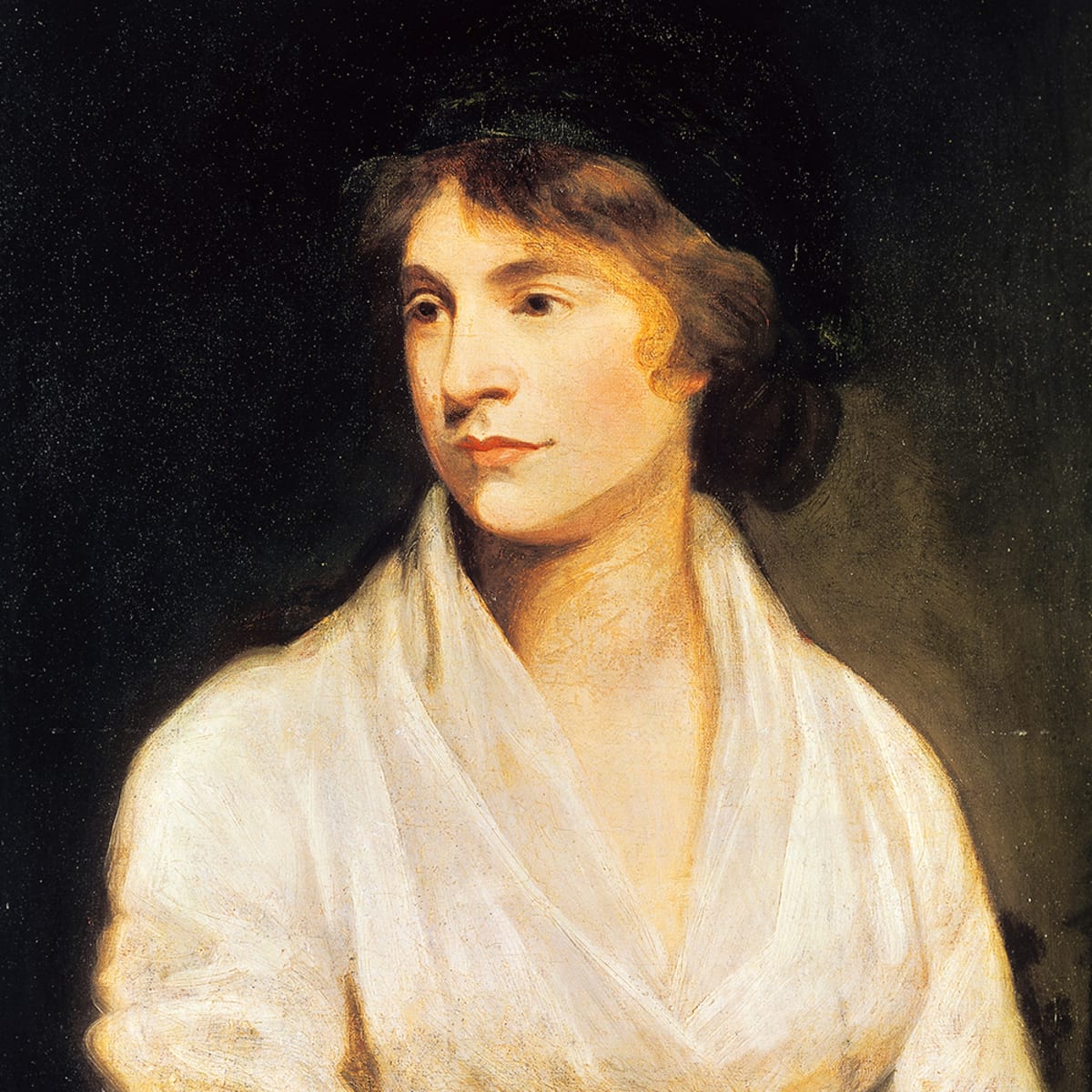
 Image from NewStatesMan.com

Image from NewStatesMan.com

Mary Wollstonecraft was an English writer, philosopher, and advocate of women's rights. Until the late 20th century, Wollstonecraft's life, which encompassed several unconventional personal relationships at the time, received more attention than her writing. Today Wollstonecraft is regarded as one of the founding feminist philosophers, and feminists often cite both her life and her works as important influences.

During her brief career, she wrote novels, treatises, a travel narrative, a history of the French Revolution, a conduct book, and a children's book. Wollstonecraft is best known for A Vindication of the Rights of Woman (1792), in which she argues that women are not naturally inferior to men, but appear to be only because they lack education. She suggests that both men and women should be treated as rational beings and imagines a social order founded on reason.

After Wollstonecraft's death, her widower published a Memoir (1798) of her life, revealing her unorthodox lifestyle, which inadvertently destroyed her reputation for almost a century. However, with the emergence of the feminist movement at the turn of the twentieth century, Wollstonecraft's advocacy of women's equality and critiques of conventional femininity became increasingly important.

 Image from LibertyFund.com

Image from LibertyFund.com

After two ill-fated affairs, with Henry Fuseli and Gilbert Imlay (by whom she had a daughter, Fanny Imlay), Wollstonecraft married the philosopher William Godwin, one of the forefathers of the anarchist movement. Wollstonecraft died at the age of 38 leaving behind several unfinished manuscripts. She died 11 days after giving birth to her second daughter, Mary Shelley, who would become an accomplished writer and author of Frankenstein.

(Source: Wikipedia.)

Mary Wollstonecraft (1759–1797) was a moral and political philosopher whose analysis of the condition of women in modern society retains much of its original radicalism. One of the reasons her pronouncements on the subject remain challenging is that her reflections on the status of the female sex were part of an attempt to come to a comprehensive understanding of human relations within a civilization increasingly governed by acquisitiveness and consumption. Her first publication was on the education of daughters; she went on to write about politics, history and various aspects of philosophy in a number of different genres that included critical reviews, translations, pamphlets, and novels. Best known for her Vindication of the Rights of Woman (1792), her influence went beyond the substantial contribution to feminism for which she is mostly remembered and extended to shaping the art of travel writing as a literary genre; through her account of her journey through Scandinavia as well as her writings on women and thoughts on the imagination, she had an impact on the Romantic movement.

(Source: Stanford Encyclopedia of Philosophy.)

 Image by Diamond Geezer, CC BY-NC-ND License

Image by Diamond Geezer,
CC BY-NC-ND License

Mary Wollstonecraft was a renowned women’s rights activist who authored A Vindication of the Rights of Woman, 1792, a classic of rationalist feminism that is considered the earliest and most important treatise advocating equality for women. This essay is often seen as the foundation of modern women’s rights movements in the Western world.

Wollstonecraft was born in England during the Enlightenment, an intellectual period that advocated for the use of reason to obtain objective truths. Self-educated, Wollstonecraft used her own accomplishments to demonstrate a woman’s aptitude for independent thought and academic excellence. With her sister Eliza and friend Fanny Blood, Wollstonecraft founded a girls’ school in London in 1784. During its brief life, the school developed a prestigious reputation and served as a starting point for Wollstonecraft’s radical ideas about the necessary equality of female and male education. Wollstonecraft’s beliefs were rooted in the idea that the government was responsible for remedying this inequity.

 Image by Fred Langridge, CC BY-NC License

Image by Fred Langridge,
CC BY-NC License

Also in London, Wollstonecraft began associating with the group, the Rational Dissenters (later known as Unitarians), which included political radicals and proponents of independence movements. After the school closed in 1786, Wollstonecraft published her first book about the importance of educating girls, Thoughts on the Education of Daughters, 1786. The book was published near the end of the French Revolution, which failed to bring about the equality of the sexes that Wollstonecraft and other radicals anticipated.

In response to Edmund Burke’s anti-revolutionary work Reflections on the Revolution in France, 1790, Wollstonecraft wrote A Vindication of the Rights of Man, 1790, which laid the groundwork for her 1792 treatise, A Vindication of the Rights of Woman. In this treatise, Wollstonecraft argued that the faculties of reason and rationality are present in all human beings and that women must be allowed to contribute equally to society. In its dedicatory letter, Wollstonecraft states, “my main argument is built on this simple principle, that if she be not prepared by education to become the companion of man, she will stop the progress of knowledge and virtue” (Wollstonecraft, A Vindication of the Rights of Woman, xxxv). In order to contribute at the same level as men, Wollstonecraft stated, women must be educated equally to men. If women were not afforded this opportunity, social and intellectual progress would come to a halt.

Wollstonecraft died in 1797 during the birth of her second daughter, Mary, who in 1816, as Mary Shelley, published her own masterpiece, Frankenstein.

(Source: BrooklynMuseum.org.)

From : Wikipedia.org / Stanford Encyclopedia of Philosophy / BrooklynMuseum.org

Works

Back to Top

This person has authored 0 documents, with 0 words or 0 characters.

1798
Wednesday Morning. I only send this as an avant-coureur, without jack-boots, to tell you, that I am again on the wing, and hope to be with you a few hours after you receive it. I shall find you well, and composed, I am sure; or, more properly speaking, cheerful.—What is the reason that my spirits are not as manageable as yours? Yet, now I think of it, I will not allow that your temper is even, though I have promised myself, in order to obtain my own forgiveness, that I will not ruffle it for a long, long time—I am afraid to say never. Farewell for a moment!—Do not forget that I am driving towards you in person! My mind, unfettered, has flown to you long since, or rather has never left you. I am we... (From: Gutenberg.org.)
1796
I left East Rusoer the day before yesterday. The weather was very fine; but so calm that we loitered on the water near fourteen hours, only to make about six and twenty miles. It seemed to me a sort of emancipation when we landed at Helgeraac. The confinement which everywhere struck me whilst sojourning among the rocks, made me hail the earth as a land of promise; and the situation shone with fresh luster from the contrast—from appearing to be a free abode. Here it was possible to travel by land—I never thought this a comfort before—and my eyes, fatigued by the sparkling of the sun on the water, now contentedly reposed on the green expanse, half persuaded that such verdant meads had never till then regaled them. I ros... (From: Gutenberg.org.)
1793
[1] Dowden’s “Life of Shelley.” [2] The child is in a subsequent letter called the “barrier girl,” probably from a supposition that she owed her existence to this interview.—W. G. [3] This and the thirteen following letters appear to have been written during a separation of several months; the date, Paris.—W. G. [4] Some further letters, written during the remainder of the week, in a similar strain to the preceding, appear to have been destroyed by the person to whom they were addressed.—W. G. [5] Imlay went to Paris on March 11, after spending a fortnight at Havre, but he returned to Mary soon after the date of Letter XIX. In August he went to Paris, where he was followed b... (From: Gutenberg.org.)
1798
“Towards midnight Mr. Venables entered my chamber; and, with calm audacity preparing to go to bed, he bade me make haste, ‘for that was the best place for husbands and wives to end their differences. He had been drinking plentifully to aid his courage. “I did not at first deign to reply. But perceiving that he affected to take my silence for consent, I told him that, ‘If he would not go to another bed, or allow me, I should sit up in my study all night.’ He attempted to pull me into the chamber, half joking. But I resisted; and, as he had determined not to give me any reason for saying that he used violence, after a few more efforts, he retired, cursing my obstinacy, to bed. “I sat musing some time long... (From: Gutenberg.org.)
1788
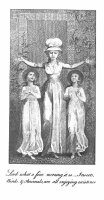
After breakfast, Mrs. Mason gave the children Mrs. Trimmer’s Fabulous Histories; and the subject still turned on animals, and the wanton cruelty of those who treated them improperly. The little girls were eager to express their detestation, and requested that in future they might be allowed to feed the chickens. Mrs. Mason complied with their request; only one condition was annexed to the permission, that they did it regularly. When you wait for your food, you learn patience, she added, and you can mention your wants; but those helpless creatures cannot complain. The country people frequently say,—How can you treat a poor dumb beast ill; and a stress is very properly laid on the word dumb;—for dumb they appear to those... (From: Gutenberg.org.)
ADVERTISEMENT. Mr. Burke’s Reflections on the French Revolution first engaged my attention as the transient topic of the day; and reading it more for amusement than information, my indignation was roused by the sophistical arguments, that every moment crossed me, in the questionable shape of natural feelings and common sense. Many pages of the following letter were the effusions of the moment; but, swelling imperceptibly to a considerable size, the idea was suggested ivof publishing a short vindication of the Rights of Men. Not having leisure or patience to follow this desultory writer through all the devious tracks in which his fancy has started fresh game, I have confined my strictures, in a great measure, to the grand principles...
1792
In the present state of society, it appears necessary to go back to first principles in search of the most simple truths, and to dispute with some prevailing prejudice every inch of ground. To clear my way, I must be allowed to ask some plain questions, and the answers will probably appear as unequivocal as the axioms on which reasoning is built; though, when entangled with various motives of action, they are formally contradicted, either by the words or conduct of men. In what does man's preeminence over the brute creation consist? The answer is as clear as that a half is less than the whole; in Reason. What acquirement exalts one being above another? Virtue; we spontaneously reply. For what purpose were the pas... (From: Gutenberg.org.)

Image Gallery of Mary Wollstonecraft

Chronology

Back to Top
An icon of a baby.
April 27, 1759
Birth Day.

An icon of a gravestone.
September 10, 1797
Death Day.

An icon of a news paper.
December 19, 2021; 9:59:39 AM (UTC)
Added to https://revoltlib.com.

An icon of a red pin for a bulletin board.
January 10, 2022; 1:40:37 PM (UTC)
Updated on https://revoltlib.com.

Comments

Back to Top

Login through Google to Comment or Like/Dislike :

No comments so far. You can be the first!

Navigation

Back to Top