 Browsing By Tag "vast majority"
Browsing By Tag "vast majority"
Note For "Anarchist Morality" This study of the origin and function of what we call "morality" was written for pamphlet publication as a result of an amusing situation. An anarchist who ran a store in England found that his comrades in the movement regarded it as perfectly right to take his goods without paying for them. "To each according to his need" seemed to them to justify letting those who were best able foot the bills. Kropotkin was appealed to, with the result that he not only condemned such doctrine, but was moved to write the comrades this sermon. Its conception of morality is based on the ideas set forth in Mutual Aid and later developed in his Ethics. Here they are given special application to "right and wrong" in the business of social living. The job is done with fine feeling and with acute shafts at the shams of current morality. Kropotkin sees the source of all so-called moral ideas in primitive superstitions. The re...
CONTROVERSY: ANARCHISTS IN THE SPANISH REVOLUTION by Sam Dolgoff In 1974, or early 1975, I reviewed in the English anarchist paper Freedom a book by Carlos Semprun Maura, Revolution and Counter-Revolution in Catalonia (French edition). In my review I criticized both Semprun Maura and Vernon Richards' book Lessons of the Spanish Revolution for presenting a distorted, over-simplified interpretation of events- a scenario. This provoked a heated rejoinder from Richards (three or four articles in Freedom). Over forty years after the tragic defeat of the Spanish Revolution - 1936 to 1939 - the question of anarchist participation in the Republican government and the role of anarchists in a revolution is a fundamental problem still debated- still r... (From : Flag.Blackened.net.)

Founding of the Worker's International by Mikhail Bakunin 1814-1876 From "The Political Philosophy of Bakunin" by G.P. Maximoff 1953, The Free Press, NY Awakening of Labor on the Eve of the International. In 1863 and 1864, the years of the founding of the International, in nearly all of the countries of Europe, and especially those where modern industry had reached its highest development - in England, France, Belgium, Germany, and Switzerland - two facts made themselves manifest, facts which facilitated and practically made mandatory the creation of the International. The first was the simultaneous awakening in all the countries of the consciousness, courage, and spirit of the workers, following twelve or even fifteen years of a state of d... (From : Anarchy Archives.)

Impressions of an English Anarchist in Ireland
To coerce the Irish people into the commission of legal crime seems to be the aim and object of the policy of the present administration. Law to be observed must either be the crystallized expression of the beliefs of the vast majority of those to whom it is enunciated, or be based upon the superior and sufficient physical force of the law-makers. In Ireland part of the written or paper law is ineffective because it does not command the assent of the people, and the makers of the law are unable to use sufficient physical force to overcome the passive resistance of the law-breakers. The breakers of the law are, however, so united in their opposition to the operation of the written law, and so bound together by common interests, that by the s... (From : AnarchyArchives.)

Ethics: Morality of the State The Theory of Social Contract. Man is not only the most individual being on earth-he is also the most social being. It was a great fallacy on the part of Jean Jacques Rousseau to have assumed that primitive society was established by a free contract entered into by savages. But Rousseau was not the only one to uphold such views. The majority of jurists and modern writers, whether of the Kantian school or of other individualist and liberal schools, who do not accept the theological idea of society being founded upon divine right, nor that of the Hegelian school-of society as the more or less mystic realization of objective morality- nor the primitive animal society of the naturalist school-take nolens volens, fo... (From : Anarchy Archives.)
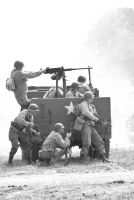
III WAR AS AN INSTITUTION IN spite of the fact that most nations at most times, are at peace, war is one of the permanent institutions of all free communities, just as Parliament is one of our permanent institutions in spite of the fact that it is not always sitting. It is war as a permanent institution that I wish to consider: why men tolerate it; why they ought not to tolerate it; what hope there is of their coming not to tolerate it; and how they could abolish it if they wished to do so. War is a conflict between two groups, each of which attempts to kill and maim as many as possible of the other group in order to achieve some object which it desires. The object is generally either power or wealth. It is a pleasure to exercise authority over other men, and it is a pleasure to live on the produce of other men's labor. The victor in war can enjoy more of these delights than the vanquished. But war, like all other natural activities, is not so much prompted...