
December 23, 1919.- We are somewhere near the Azores, already three days at sea. No one seems to know whither we are bound. The captain claims he is sailing under sealed orders. The men are nearly crazy with the uncertainty and worry over the women and children left behind. What if we are to be landed on Denikin territory. . . . . . . We were kidnapped, literally kidnapped out of bed in the dead of night. It was late in the evening, December 20, when the prison keepers entered our cell at Ellis Island and ordered us to "get ready at once." I was just undressing; the others were in their bunks, asleep. We were taken completely by surprise. Some of us expected to be deported, but we had been promised several days' notice; while a number were to be released on ba...

From: International Publishers, International Pamphlets No. 12, sponsored by the John Reed Club, an organization of revolutionary writers and artists in New York. Third edition, 1934. On March 18, 1871, the revolutionary workers of Paris established the Commune. It was the first attempt at a proletarian dictatorship. Again and again the story has been told: how Napoleon III (the Little) attempted to bolster up the decaying regime of the Second Empire by declaring war on Prussia in July, 1871; how he met his debacle at Sedan and exposed Paris to the Prussian troops; how a bourgeois republic was proclaimed in September and a so-called Government of National Defense organized; how this Government betrayed the besieged city and how the Parisian... (From : Anarchy Archives.)
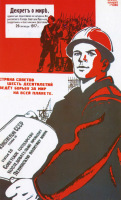
The Russian Revolution Series No.1 The RUSSIAN TRAGEDY (A Review and An Outlook) by Alexander Berkman FOREWORD We live at a time when two civilizations are struggling for their existence. Present society is at death grips with the New Ideal. The Russian Revolution was but the first serious combat of the two forces, whose struggle must continue till the final triumph of the one or of the other. The Russian Revolution has failed - failed of its ultimate purpose. But that failure is a temporary one. In the point of revolutionizing the thought and feeling of the masses of Russia and of the world, in undermining the fundamental concepts of existing society, and lighting the torch of faith and hope for the Better Day, the Russian Revolution has b... (From : Anarchy Archives.)

Every revolution — even when studied closely by many authors of various tendencies, and at different times — long remains, fundamentally, a great Unknown. Centuries pass, and from time to time, men turn up new facts and unpublished documents among the remains of old uprisings. These discoveries upset our knowledge and ideas which we had supposed to be complete. How many works about the French Revolution of 1789 already existed when Kropotkin and Jaures unearthed from the ruins elements unknown until then, which threw unexpected light on that period? And didn’t Jaures say that the vast archives of the Great Revolution were hardly tapped? Generally, it is not known how to study a revolution, just as it is still not known how to write the history of a people. Moreover, authors, even when experienced and conscientious, commit errors and negligences which prevent the reader from getting a clear understanding of their theme. They take the trouble, for instance,...